Asset-Backed Investing in India: The Complete Guide for Sophisticated Investors
Pyse Capital · 1 July 2026
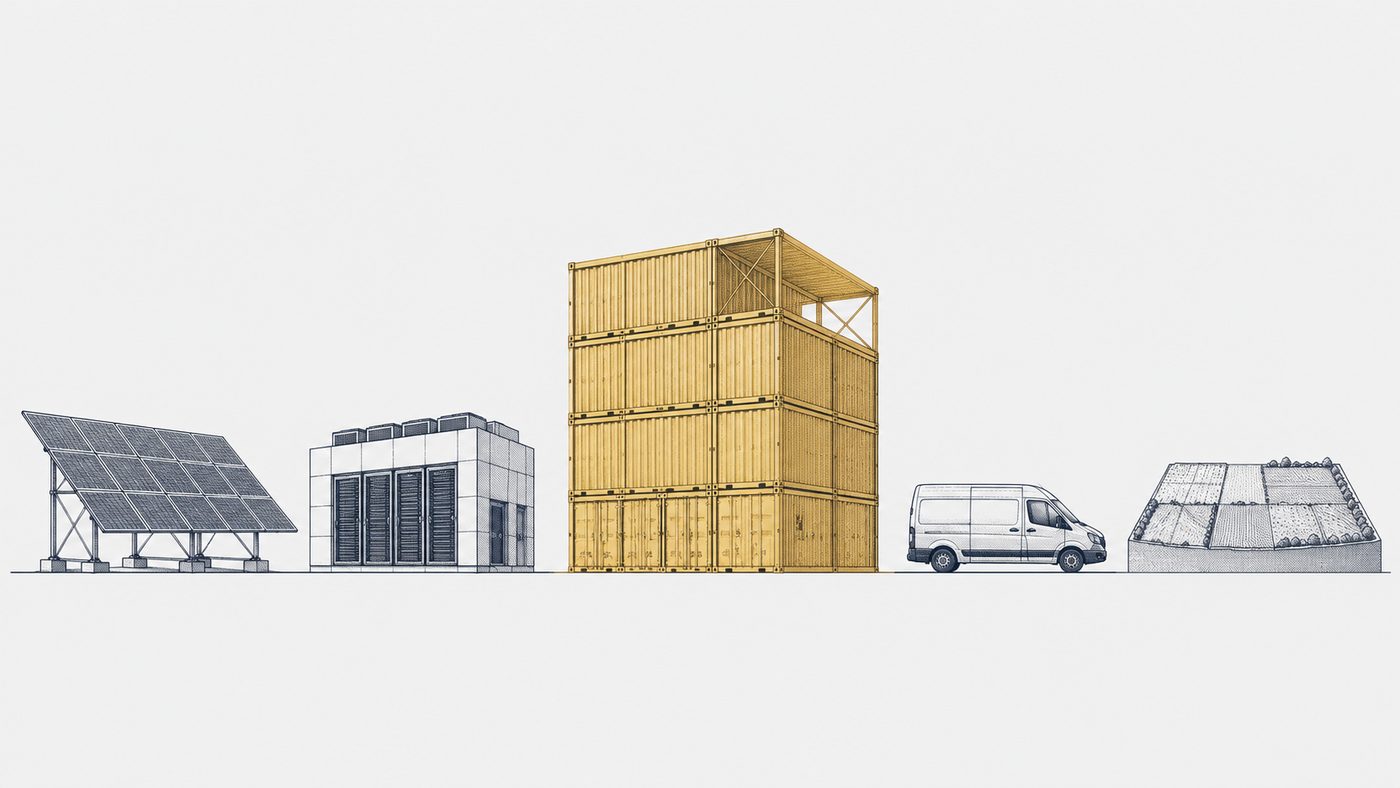
Asset-backed investing is the practice of investing in instruments whose income and downside protection come from specific, identifiable physical assets: a solar plant with a power purchase agreement, land under long-term lease, a commercial vehicle fleet on multi-year rental contracts. The investor's return is generated by the productive use of the asset, and the investor's capital is collateralised by the asset itself. This distinguishes it from conventional fixed income, where the investor holds a claim on a borrower's promise, and from equity, where returns depend on business performance and market sentiment.
One clarification belongs at the outset. Asset backing does not make an investment safer in absolute terms; it changes the nature and location of risk, from pure credit exposure to a mix of operating, counterparty, regulatory and liquidity exposures. Understanding that relocation, and evaluating whether a given structure manages it well, is the work this guide is meant to support.
In brief. Asset-backed investing means income generated and secured by identifiable physical assets rather than by a borrower's balance sheet or a market's mood. Two forces are driving its emergence in India: a global reallocation of private capital toward contracted income, and a record buildout of energy, digital and logistics infrastructure. The phrase "asset-backed" spans a wide spectrum of structures, and the work of due diligence is locating any given product on that spectrum. Asset backing improves recovery prospects and reduces market correlation; it does not remove operating, counterparty, policy, liquidity or platform risk.
First, a necessary disambiguation
Search for "asset-backed investment" and most of what returns concerns asset-backed securities, or ABS. The two are different instruments, and the difference matters.
ABS is a securitisation product. Financial receivables such as auto loans or credit card dues are pooled, sliced and sold to investors. The underlying is a bundle of loans; the investor's risk is the aggregate repayment behaviour of thousands of borrowers; the return comes from interest spreads.
Asset-backed investing, as this guide uses the term, is direct or structured exposure to income-generating physical assets. The underlying is not a pool of receivables but a tangible, productive thing. The risk is the performance and value of that thing. The return comes from its contracted output: electricity sold, land leased, vehicles rented.
Practical differences follow. In a stress scenario, a physical asset can be repossessed, re-leased or resold, while a defaulted loan pool must be worked out. Valuation rests on the discounted value of contracted cash flows, with replacement cost serving as the liquidation floor, rather than on credit models. And operating income is insulated from day-to-day capital-market sentiment, though exit or refinancing at maturity still interfaces with market liquidity.
In practice, the boundary can blur. Many instruments sit between pure ABS and pure physical-asset exposure: a solar fund might hold the plant while also securitising its PPA receivables, and a listed infrastructure trust combines direct ownership with financial engineering above it. The investor's true risk profile depends on which layer dominates — the receivables or the asset itself.
Why the category is emerging now
Two changes are under way at the same time, and asset-backed investing sits where they meet.
Shift one: private capital is reallocating toward income. Global private credit grew from roughly USD 1.5 trillion to USD 3.5 trillion in assets under management in five years, according to the Alternative Credit Council's Financing the Economy 2025 report, and Preqin projects the market will approach USD 4.5 trillion by 2030. The most deliberate allocators of private wealth are moving fastest: the UBS Global Family Office Report 2025, surveying 317 family offices, found average allocations to private debt doubled from 2 percent to 4 percent during 2024, the largest relative increase of any asset class in the survey.
Most of this growth is direct corporate lending: buyout debt, mid-market loans, growth capital. Asset-backed strategies are a distinct, smaller sub-sleeve within it. The relevance of the private credit boom to this guide is therefore not that the flows are going into physical assets today but what the flows reveal about demand. Allocators are paying for income that is contracted, defined by lease, offtake or rental agreements so that income arrives on schedule rather than depending on an exit; collateralised, anchored by something with residual value rather than only a borrower's promise; and visible, with performance observable through the life of the exposure rather than read off a quarterly mark. Physical assets are the most literal way to supply all three at once, and much of the private credit market itself delivers only the first.
Shift two: the real economy is building exactly those assets. Global energy investment is set to reach USD 3.3 trillion in 2025, the highest figure the International Energy Agency has recorded in its World Energy Investment series, with roughly two-thirds flowing to electricity, grids, storage and electrification rather than fossil fuels. In parallel, JLL's 2026 Global Data Center Outlook projects the data centre buildout will absorb close to USD 3 trillion by 2030, with global capacity nearly doubling. Each of these is a category of long-lived, physical, contracted assets.
In India, both shifts are amplified, though not automatically. The country is targeting more than 500 gigawatts of non-fossil power capacity by 2030, and reached half its installed base from non-fossil sources in June 2025, five years ahead of schedule, per Ministry of Power statements. Industry estimates, including CareEdge Ratings at the conservative end, suggest data centre capacity of roughly 1.5 gigawatts today could reach between 4 and 8 gigawatts by 2030, though grid connection, permitting and execution risk make the range wide. Against this demand, India's private credit market remains early: estimates compiled in the Chambers Global Practice Guides and EY's Private Credit in India series put assets under management at roughly USD 25 to 30 billion, about 0.6 percent of GDP, against more than 6 percent in the United States. That scarcity of formation capital is precisely why the category's yields are attractive; capital that is abundant is never well paid. Whether the gap translates into a scalable, investable category depends on structural enablers that are still maturing: securitisation and trust frameworks, the enforceability of long-term contracts under Indian law, and tax treatment of structured real-asset vehicles. The direction of all three has been constructive; the pace is the variable worth watching.
There is also a simpler, household-level version of the argument. For an investor in the highest tax bracket, a bank fixed deposit at prevailing rates often delivers a post-tax return that sits near, and in many years below, consumer inflation. Generating income that meaningfully beats that line involves a trade-off among market risk, unsecured credit risk, and asset-backed structures, each with distinct risk profiles and operational demands. The deposit comparison is where most Indian investors start; it should not be where the analysis ends. The more rigorous benchmark is the spread over liquid AA and AAA corporate bonds or listed InvITs.
The asset categories forming in India
Five categories currently define the opportunity set.
Land and sites. Serviced land near power and connectivity, generating long-term ground lease income with value uplift as it is entitled and serviced. Land converts to income slowly but holds value stubbornly, and in India it carries the operational weight of title verification, conversion and aggregation.
Power and storage. Solar generation and battery storage under long-term contracts, frequently 25-year power purchase agreements, producing the longest-dated contracted cash flows in the category.
Equipment and fleets. Commercial equipment, most visibly electric vehicle fleets, leased to operators on multi-year contracts. Equipment converts to income within weeks of deployment but carries operating intensity: utilisation, maintenance and counterparty payment behaviour must be actively managed.
Digital infrastructure. Data centre shells, the power that feeds them and the assets around them. A single megawatt of new capacity pulls a stack of real assets behind it: land where power and connectivity coincide, generation, grid connections, storage, cooling, and equipment on multi-year contracts.
Logistics and storage. Grade A warehousing serving trade and e-commerce on multi-year indexed leases, where annual absorption is expected to exceed 45 million square feet by the end of 2026, per Vestian's sector reviews.
| Category | Speed to income | Value retention | Typical contract | Key operating risk | Listed analogue |
|---|---|---|---|---|---|
| Land and sites | Slow | High | Long-term ground lease | Title, entitlement, timing | REITs |
| Power and storage | Medium | Medium-high | 10–25 yr PPA/offtake | Grid connection, offtaker credit | InvITs |
| Equipment and fleets | Fast (weeks) | Medium, depreciating | 2–6 yr leases | Utilisation, lessee credit | Listed leasing NBFCs |
| Digital infrastructure | Medium | High | Take-or-pay, colocation | Power availability, execution | Data centre REITs (global) |
| Logistics and storage | Medium | High | Multi-year indexed leases | Vacancy, tenant concentration | REITs |
Ratings are directional and horizon-dependent; in distressed scenarios, liquidity and enforceability matter more than nominal value retention. Land, power and digital infrastructure additionally carry regulatory and political risk; long-dated assets carry interest rate sensitivity.
What "backed" actually means: the spectrum investors must interrogate
The phrase "asset-backed" spans a wide range of structures, and the category's growth guarantees the phrase will be used loosely. Investors should locate any product on this spectrum before committing capital. The spectrum is a due-diligence framework, not a rating of any specific platform or product.
At the weak end, "backed" is rhetorical. The platform invests in assets somewhere, but the investor holds an unsecured claim on an intermediary. If the intermediary fails, the investor queues with its other creditors.
In the middle sit partial structures: a charge over some assets, guarantees, or a first-loss cushion. These improve recovery without tying each unit of capital to a specific asset, and a first-loss cushion only helps if it is adequately sized, genuinely ring-fenced, and independent of the platform's broader balance sheet.
At the strong end, every unit of investor capital corresponds to identified physical assets of equal or greater value, held in a structure giving investors enforceable rights over them. Here the question "what stands behind my money?" has a specific, inspectable answer: this plant, this parcel, this fleet, with this contract. "Enforceable" deserves its own scrutiny in the Indian context: enforcement timelines, insolvency processes and sector-specific regulation can materially affect what recovery looks like in practice, not just in documentation.
Three tests separate the strong end of the spectrum from the rest. Identifiability: can the investor or their advisor point to the specific assets and the legal mechanism connecting them to the investment? Contract quality: are the counterparties, tenures and termination provisions of the revenue agreements disclosed? Ongoing visibility: does the investor see asset-level performance through the holding period, or only at the point of sale?
What asset backing protects against, and what it does not
Asset backing addresses recovery risk: if a structure fails, collateral gives investors a claim on something real and saleable. It addresses correlation risk: a solar plant's output and a fleet's lease income do not move with the Nifty. It does not eliminate operating risk, since plants underperform irradiance estimates and fleets sit idle if a lessee's business shrinks. It does not eliminate counterparty risk, since offtakers and operators can delay payment. It does not eliminate policy risk, since changes in land-use rules, tariffs, clearances or sector licensing can alter an asset's economics even when the asset and its contracts are intact. It does not eliminate liquidity risk, since physical assets take time to sell and most structures involve multi-year commitments. And it does not eliminate platform risk, since diligence quality, asset management competence and governance determine outcomes as much as the asset class does.
India has already run the live experiment on counterparty and policy risk. In 2019, Andhra Pradesh's newly elected government moved to renegotiate the solar and wind PPAs signed by its predecessor; payments to generators froze, ratings were downgraded, and although the High Court ultimately ordered the contracts honoured in full, investors absorbed roughly three years of arrears before the ruling. For a leveraged structure, a freeze of that length is not an inconvenience; it is a broken IRR and a potential technical default. Strong structures price this possibility in advance: debt service reserve accounts, working capital lines, and revenue diversified across central offtakers such as SECI and NTPC and commercial and industrial counterparties rather than concentrated in a single state utility.
The discipline to adopt: treat "asset-backed" as the beginning of due diligence, never its conclusion.
How the category compares with the alternatives an Indian investor actually holds
Against fixed deposits: higher targeted yields in exchange for illiquidity and operating risk, with no DICGC insurance backstop.
Against private credit AIFs: the distinction is not security versus none; many private credit deals are collateralised. The difference is the primary risk driver: private credit returns depend on a borrower's cash flow and solvency, while asset-backed returns depend primarily on a physical asset's contracted output and residual value.
Against REITs and InvITs: listed trusts offer daily liquidity and market-price volatility; private asset-backed structures offer the reverse trade, typically with higher target yields reflecting the illiquidity premium.
Against direct ownership: buying land or property oneself offers full control, direct title and, in some cases, favourable capital gains treatment. It also inherits the full operational burden: title diligence, contracting, management and eventual sale. Structured exposure trades some control for professional origination and management. Which trade is right depends on the investor's time, expertise and appetite for operational involvement.
On tax. Treatment varies materially by vehicle. Category I and II AIF income is generally taxed on a pass-through basis at the investor's rate; lease and interest-style income is typically taxed at slab; capital gains on disposal attract their own rates and holding-period conditions. Stamp duty, registration and TDS can apply at the asset or transaction level and materially affect net returns. The post-tax comparison between structures often matters more than the headline yield, and investors should model it with their own tax advisors before committing.
The evaluation checklist
Seven dimensions, each with the questions that make it concrete.
- Asset verification. Do the assets exist, and does independent evidence say so? Title searches, registration records, third-party engineering or survey reports, and environmental clearances, examined rather than assumed.
- Collateral structure. What is the precise legal mechanism linking capital to assets? Is there a registered charge or mortgage, and at what level, asset or SPV? Is the SPV bankruptcy-remote from the platform? Are cash flows held in trustee-managed escrows, ring-fenced from the platform's own balance sheet?
- Cash flow contracts. Are the PPAs, leases or rental agreements disclosed, with counterparties, tenures and escalators visible? What termination rights, step-in rights and change-of-law provisions do they contain? Is revenue concentrated in a single offtaker, state utility or region?
- Alignment. Does the platform hold its own capital in the assets, and on what terms? Do fee structures reward long-term asset performance or short-term transaction volume?
- Track record. Is repayment history audited or independently verifiable across completed cycles? Has the platform navigated a genuine stress event, a payment dispute, a lessee default, a regulatory intervention, and can it show documentation of resolution, recovery and investor communication?
- Exit mechanics. What happens at maturity? What early-liquidity options exist, and at what cost? Is there an established buyer base for this asset class in India, and what do time-to-sale and price discounts look like in distress?
- Legal and regulatory standing. Are land-use conversions, environmental approvals and sector licences in place and unchallenged? In real assets, a missing approval is not paperwork; it is a claim on future cash flow.
Platforms that welcome these questions are telling you something. So are platforms that deflect them.
The portfolio role
Asset-backed allocations function as an income sleeve, sitting between traditional fixed income and equity in risk and expected return. They typically show low correlation to public equity and bond markets in normal conditions, though in a systemic shock they can still face liquidity pressure, counterparty stress and policy intervention that reduce their defensive appeal. Most Indian HNI balance sheets concentrate in equities, deposits and directly held property; the category adds a return stream driven by contracted asset performance rather than markets or any single borrower's solvency. Standard practice treats it as a complement to a diversified liquid core, sized within the investor's illiquidity tolerance and diversified across counterparties and asset types rather than concentrated in any one of them.
FAQ
What is asset-backed investing in simple terms? Investing in products where identifiable physical assets, such as solar plants, land or vehicle fleets, generate the returns and stand as collateral behind the capital.
Is it the same as asset-backed securities (ABS)? No. ABS are securitised pools of financial loans. Asset-backed investing here means exposure to income-generating physical assets directly or through dedicated structures, though hybrid instruments exist and investors should identify which layer drives their risk.
Is asset-backed investing safe? No investment is risk-free. Asset backing improves recovery prospects and reduces market correlation, but it relocates rather than removes risk: operating, counterparty, policy, liquidity and platform risks remain.
What returns does it offer in India? Returns vary by asset class and structure. Well-structured real-asset products typically target yields above liquid fixed-income alternatives in exchange for multi-year illiquidity; any specific figure should come from a product's own documentation, with its assumptions visible.
Who should consider it? Investors with a stable liquid core, a multi-year horizon, and a need for income that does not depend on market movements: typically HNIs, family offices, and clients of wealth advisors building diversified income sleeves.
Pyse is an asset-backed capital platform that develops, owns and structures income-generating real assets in India and the United Arab Emirates.
Editorial note: This article reflects Pyse's perspective on asset-backed investing. It is not independent research or a rating of any product.
Disclaimer: This article is for informational purposes only and does not constitute investment, legal or tax advice, a recommendation, or an offer or solicitation to buy or sell any security or product. Asset-backed investments are illiquid and involve risk, including loss of principal. Past performance is not a reliable indicator of future results. Investors should conduct independent due diligence and consult their own advisers.